
Blower Door Testing in Orange County
Certified Air Leakage Testing for New Construction, Additions, and Title 24 Compliance. We help builders meet California's airtightness standard—the first time.
Meet California's Airtightness Standard. Keep Your Project on Schedule.
Under Title 24, a home is no longer just judged on its insulation or windows; it's judged as a complete system. Uncontrolled air leakage through the building envelope is a primary source of energy waste and a direct path to a failed final inspection. For builders and contractors in Orange County, a blower door test isn't optional—it's a mandatory step to prove build quality and finalize a permit.
We specialize in providing the precise, reliable blower door testing that Orange County builders need. Our process is designed to be efficient, integrate seamlessly with your construction schedule, and deliver the certified documentation required to keep your project moving forward without delay.
What is a Blower Door Test? A Measure of Build Quality.
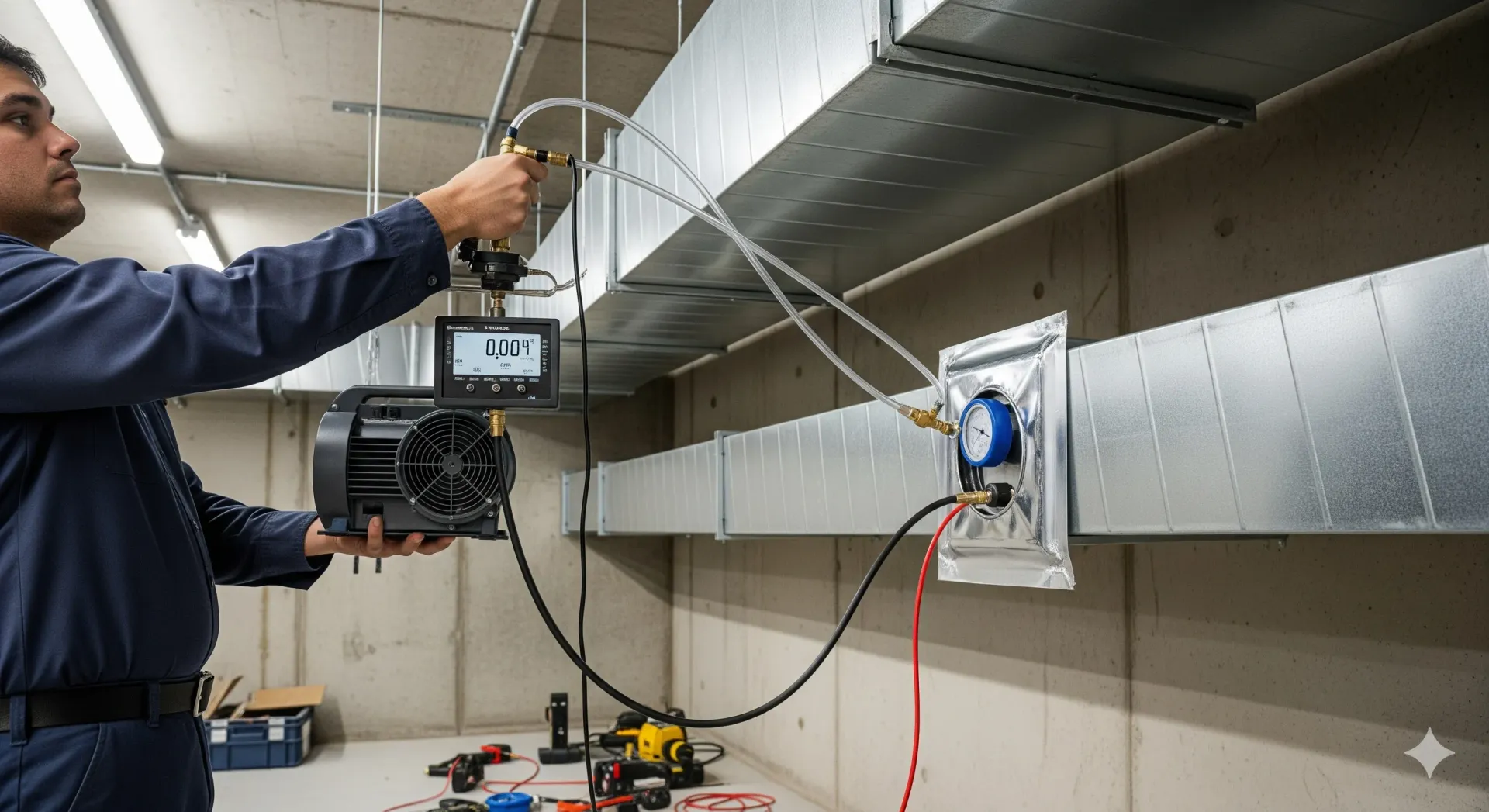
A blower door test is a scientific method for measuring the airtightness of an entire house. Our system uses a temporary, calibrated fan mounted in an exterior doorway to pull air out of the home, creating a slight negative pressure (50 Pascals). A sensitive digital manometer then measures the volume of air flowing through the fan.
This airflow number tells us exactly how much air is leaking into the house through unsealed gaps, cracks, and penetrations in the building envelope. The result is expressed in Air Changes per Hour at 50 Pascals (ACH50), the universal standard for building performance and the metric your building inspector will demand to see.
Blower Door Testing Requirements in Orange County
A certified HERS Blower Door Test is a mandatory component of the Title 24 energy code for:
- All New Residential Construction: Every new single-family home, townhome, and multi-family apartment unit must pass a blower door test to finalize its permit.
- Major Additions & Alterations: Additions that significantly increase the home's conditioned volume or alterations that affect the building envelope often require a blower door test.
- Performance-Based Title 24 Compliance: When using the performance method for compliance, an excellent blower door score can provide extra energy credits.
- Comprehensive Home Energy Audits: It is the foundational test for any existing home energy audit, diagnosing drafts and quantifying potential energy savings.
Not sure if you need it?
Send your permit scope and ZIP. We’ll confirm required tests and bundle with Charge & Airflow, Fan Watt, or Blower Door if needed.
Benefits for Builders and Homeowners Alike
A home that passes the blower door test is a better home, period.
For Builders & Contractors:
Pass Final Inspection: Satisfy the HERS verification requirement and get your permit signed off without costly delays.
Build a Superior Product: Use the certified ACH50 score as a verifiable mark of quality craftsmanship and a key selling point.
Reduce Comfort-Related Callbacks: An airtight home has fewer drafts and temperature fluctuations, leading to happier clients.
For Homeowners:
Lower Lifelong Energy Costs: An airtight home requires substantially less energy to heat and cool, delivering savings month after month.
Consistent Indoor Comfort: By eliminating random drafts, you gain a more stable, comfortable, and quiet indoor environment.
Improved Air Quality & Control: A sealed envelope prevents unfiltered air, dust, and pollutants from entering your home, while allowing your ventilation system to work as designed.
Blower Door Testing FAQs for Builders and Homeowners
What is ACH50 and what is the passing score in California?
ACH50 stands for "Air Changes per Hour at 50 Pascals." It's the standard metric for home airtightness. The current California Energy Code requires that all new homes have an air leakage rate of 5.0 ACH50 or less. This means the entire volume of air inside the house must not be replaced more than 5 times per hour during the test.
At what stage of construction should a blower door test be performed?
The test should be performed at the very end of construction, just before the final building inspection. All windows, doors, and drywall must be installed, and all penetrations for plumbing, electrical, and HVAC must be fully sealed with the appropriate caulk, foam, or gaskets.
What are the most common air leakage points in new homes?
Common failure points include unsealed top and bottom wall plates, gaps around windows and doors, unsealed attic access hatches, and penetrations for recessed lighting that are not rated as Insulation Contact Air Tight (ICAT).
What happens if the house fails the blower door test?
If the home's leakage rate is above 5.0 ACH50, we provide a detailed report and can use diagnostic tools like smoke pencils or thermal imaging to help your crew locate the primary sources of leakage. This allows for targeted repairs, after which we can schedule a priority re-test to get the project certified.
Keep Your Construction Project On Schedule.
Don't let the final HERS verification be a bottleneck. Partner with a reliable, professional HERS rater who understands the needs of Orange County builders.
Complete Your New Construction HERS Verification
A blower door test is a key part of your final inspection, but it's not the only HERS verification required for new homes in Orange County. We provide the full suite of tests needed to get your new construction project fully certified and ready for permit closure.
Related services for new construction include: